Running a Refill Shop: The Messy Middle Between Sustainability and Profitability
Mar 05, 2026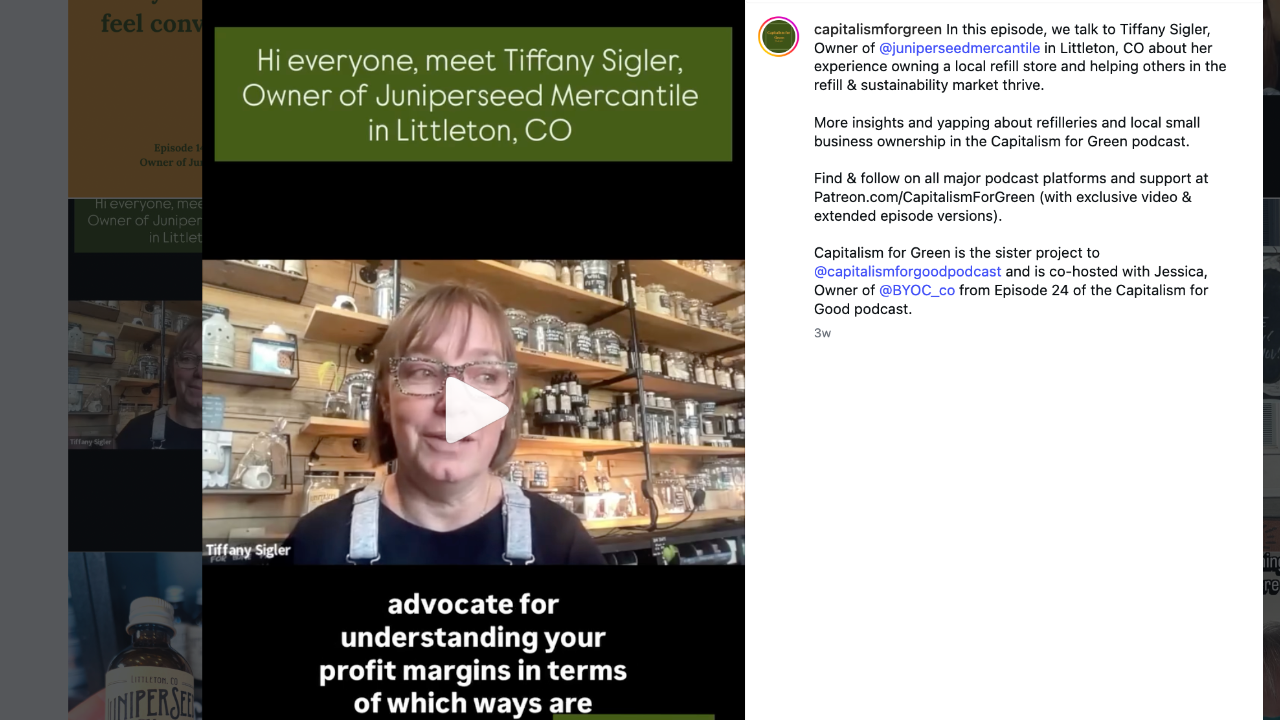
One of the things I value most about being in this work is the community of other refill shop owners.
The conversations we have with each other — the honest ones — are rarely about the polished parts of business. They’re about what’s actually happening on the ground: what’s working, what isn’t, the unexpected challenges, and the small insights that make a big difference over time. Those conversations form a kind of subterranean network of knowledge and support that helps this ecosystem thrive.
Recently, I had the chance to sit down with Andrea and Jess on the Capitalism for Green podcast. The conversation ended up feeling less like a formal interview and more like one of those long, honest chats that happen when shop owners start comparing notes.
They asked thoughtful questions about how I run my shop, some of the decisions I’ve made that don’t always match what’s considered “normal” in the refill world, and the reasoning behind those choices.
A few themes that came up during the conversation included:
Designing Around Margin Reality
Many refill shops start from a place of strong values — sustainability, waste reduction, community care. But values alone don’t keep the doors open. One of the things I’ve learned over time is that it’s important to design the business model around financial sustainability as well as environmental sustainability. That often means making operational choices that aren’t always the obvious or traditional ones.
Making Refill Feel Welcoming
Another topic we talked about was the experience of walking into a refill shop. My hope has always been that refilling feels welcoming and accessible, not intimidating or exclusive. The goal is for someone to feel comfortable walking in with a container and simply asking to fill it — no special knowledge required. If refill culture is going to grow, it has to feel like something anyone can participate in.
The Burnout That Sneaks Up on Shop Owners
One of the more honest parts of the conversation was about burnout. There are certain refill business models that look beautiful and values-aligned on the surface, but can quietly create unsustainable workloads for the people running them. Sometimes those pressures show up slowly and unexpectedly. Talking about those realities openly is important, because it helps all of us build businesses that are sustainable for the planet and for the people doing the work.
Imagining a Life of Ease
At one point in the conversation we talked about something that doesn’t get discussed very often in small business spaces — the idea of giving ourselves permission to imagine a life of ease. Not ease as in avoiding hard work, but ease as in building systems and structures that allow the business to support the life we want to live, rather than consuming it entirely. That idea has shaped many of the decisions I’ve made over time.
Listening to the Conversation
If you’d like to hear the full conversation, you can listen to the episode here.
Andrea and Jess have created a wonderful podcast that explores sustainability-minded businesses through the lens of real operations and real decision-making. If you’re interested in how other refill shops and environmentally focused businesses are navigating this work, I highly recommend exploring some of the other episodes as well. Hearing a range of perspectives is one of the most helpful reminders that there isn’t just one “right” way to do this.
Running a refill shop — or any sustainability-focused business — often means living in the space between ideals and reality. The more openly we can share what that looks like, the stronger this ecosystem becomes.
If you listen to the episode and something resonates, I’d love to hear what stood out to you. Conversations like these are often where the most helpful insights begin to emerge.
Run a sustainable business without burning out.
Learn to simplify operations, tighten margins, and build a business that truly supports you.
The Lean Refillery: A Blueprint for Sustainable Micro-Manufacturing